
เสียงวรรณยุกต์ – Thai Tone Etymology
1 min read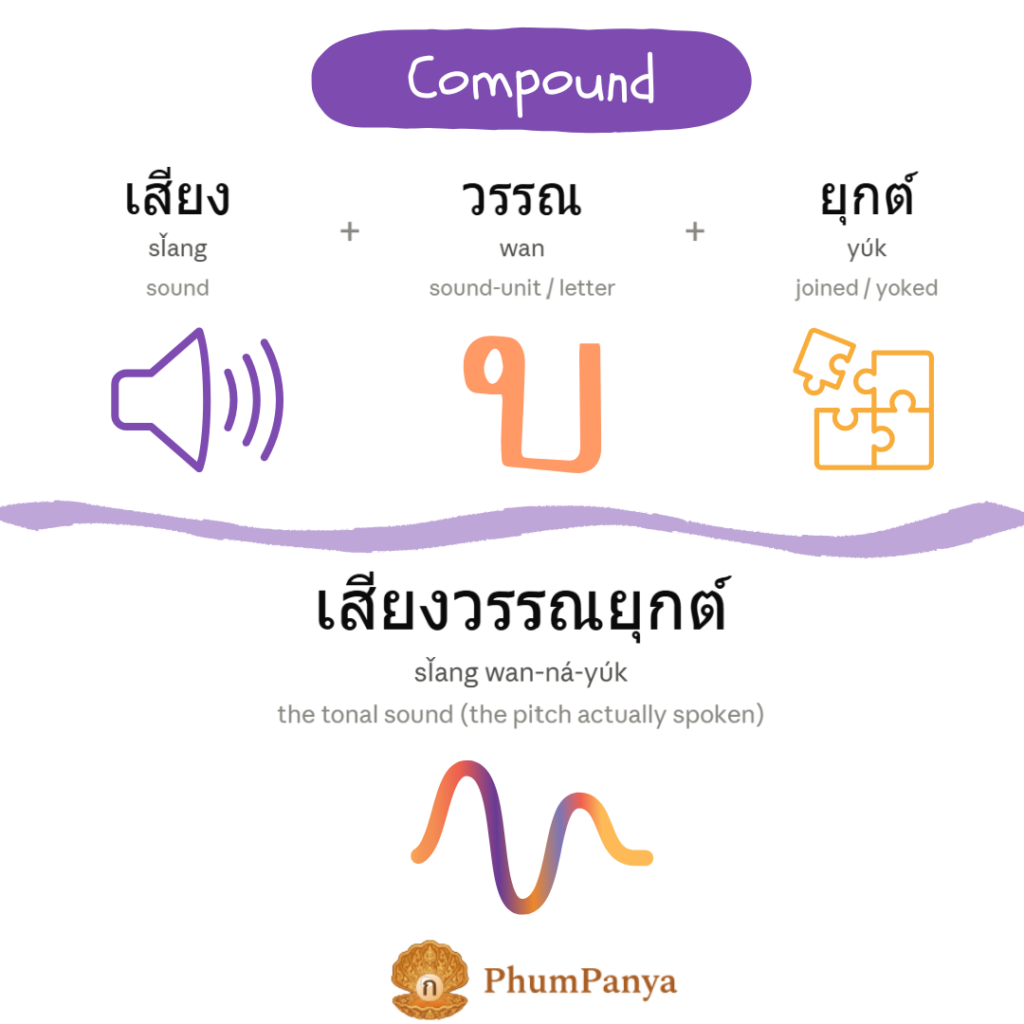
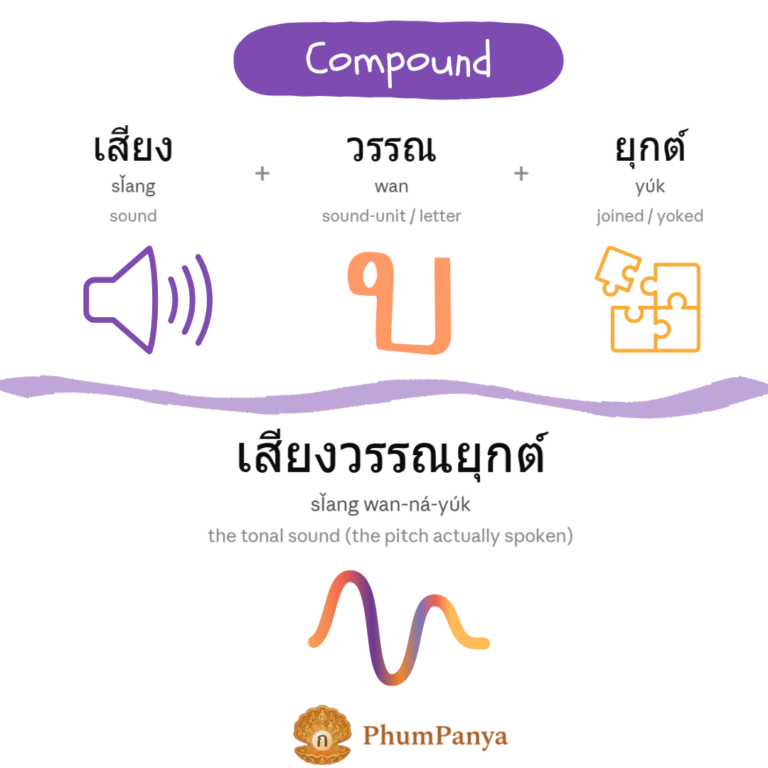
[th-audio text=”เสียง” url=”https://cdn.phumpanya.com/2026/07/09061536/speech-1783577735.mp3″] — sǐang (R)
Meaning: sound, voice, noise.
Etymology: Native Thai (Tai-Kadai) root — not borrowed from Sanskrit or Pali.
[th-audio text=”วรรณ” url=”https://cdn.phumpanya.com/2026/07/09061543/speech-1783577743.mp3″] — wan (M)
Meaning: here, “letter” (a single unit of the alphabet); more broadly can also mean “colour” or “class/caste.”
Etymology: From Sanskrit varṇa. The root sense is “a distinguishing category.” In Pāṇini’s grammar and Sanskrit phonetics, varṇa specifically denoted an individual speech-sound/letter — the sense inherited here. The same word also gave Thai วรรณคดี (wan-ná-khá-dii, “literature,” literally “the course of letters”) and, via its “class” sense, words touching on caste.
[th-audio text=”ยุกต์” url=”https://cdn.phumpanya.com/2026/07/09061549/speech-1783577748.mp3″] — yúk (H)
Meaning: joined, connected, applied, yoked.
Etymology: From Sanskrit yukta, the past participle of the verb root yuj (“to join, harness, yoke”). This is a major Proto-Indo-European root (*yeug-), making ยุกต์ a direct relative of Sanskrit Yoga (“union”), and — through separate Indo-European branches — of English yoke, join, junction, and jugular.
The fusion: [th-audio text=”เสียงวรรณยุกต์” url=”https://cdn.phumpanya.com/2026/07/09061632/speech-1783577791.mp3″]
“Sound” + “letter” + “joined” → the pitch actually spoken on a syllable, as opposed to วรรณยุกต์ alone (letter + joined), which names the written tone mark rather than the spoken tone.