
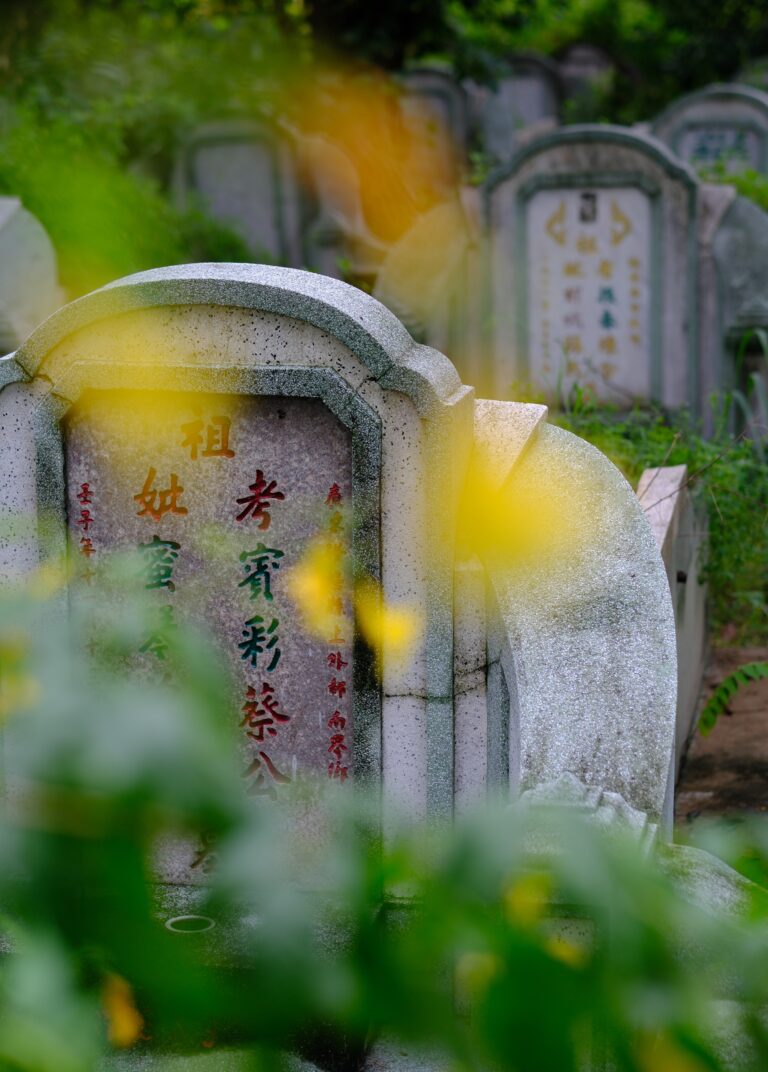
Teochew Cemetery Park (สุสานแต้จิ๋ว)
Have you ever walked through a cozy, well-kept old cemetery turned into a city park? If not, I invite you for a walk. Today we are off to Teochew Cemetery Park.
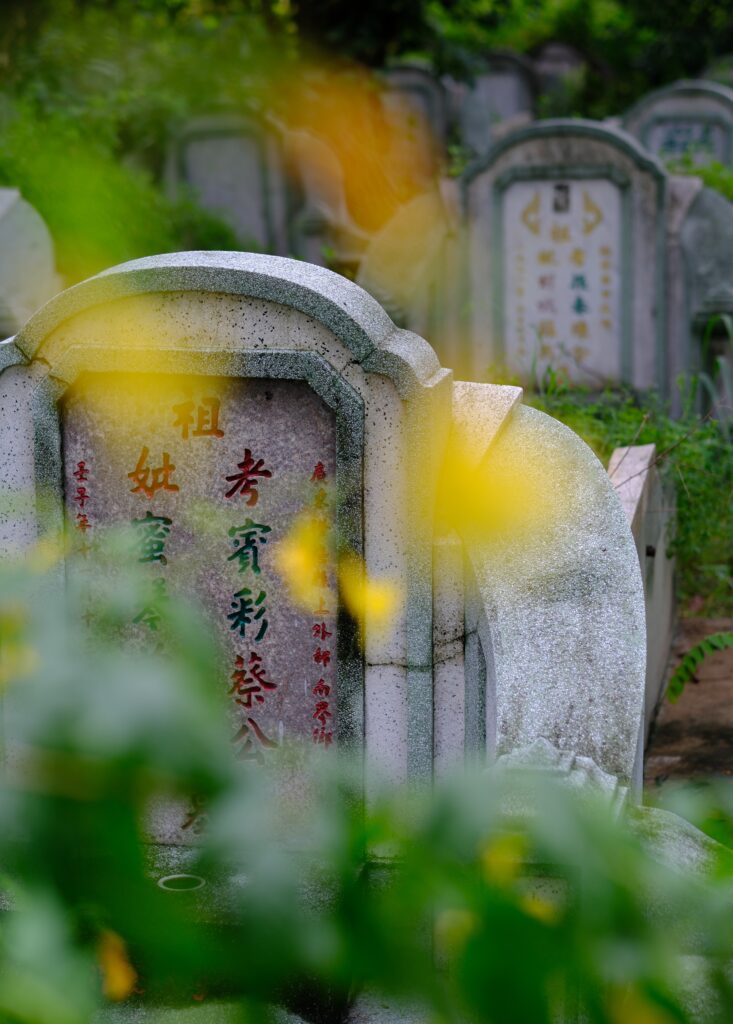
I love exploring Bangkok in the morning – in relative cool and without the crowds. So today I set out around 6 a.m. An empty BTS – I get off at Surasak station. I thread my way toward the park through narrow streets, but immediately get distracted by the local cats in all their colors. I am taking aim with my camera at one particularly appealing specimen across the road, and a Grab delivery driver on a scooter slows down and waits until I have photographed the furry model. Only in Thailand!
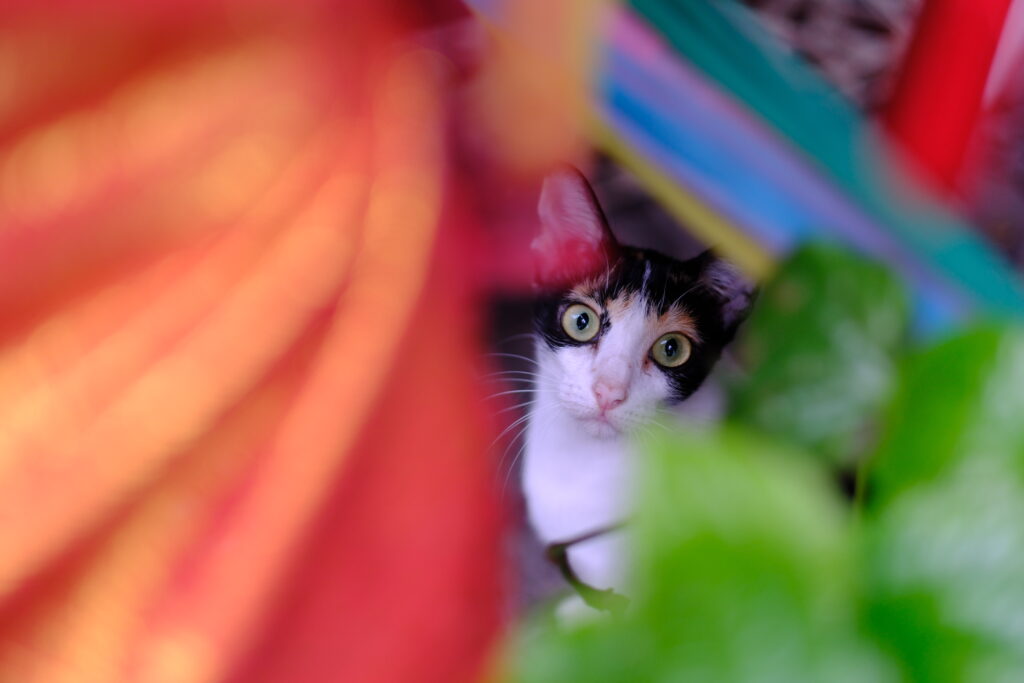
On the way to the park I stop to photograph a graffiti wall, when a grandmother comes out of the house opposite and waves at me. She asks where I am from and where I am headed, and tells me she is from Hong Kong herself but has lived here for many years. She has a lovely little garden and the energy of a person from the vanished pre-digital world.
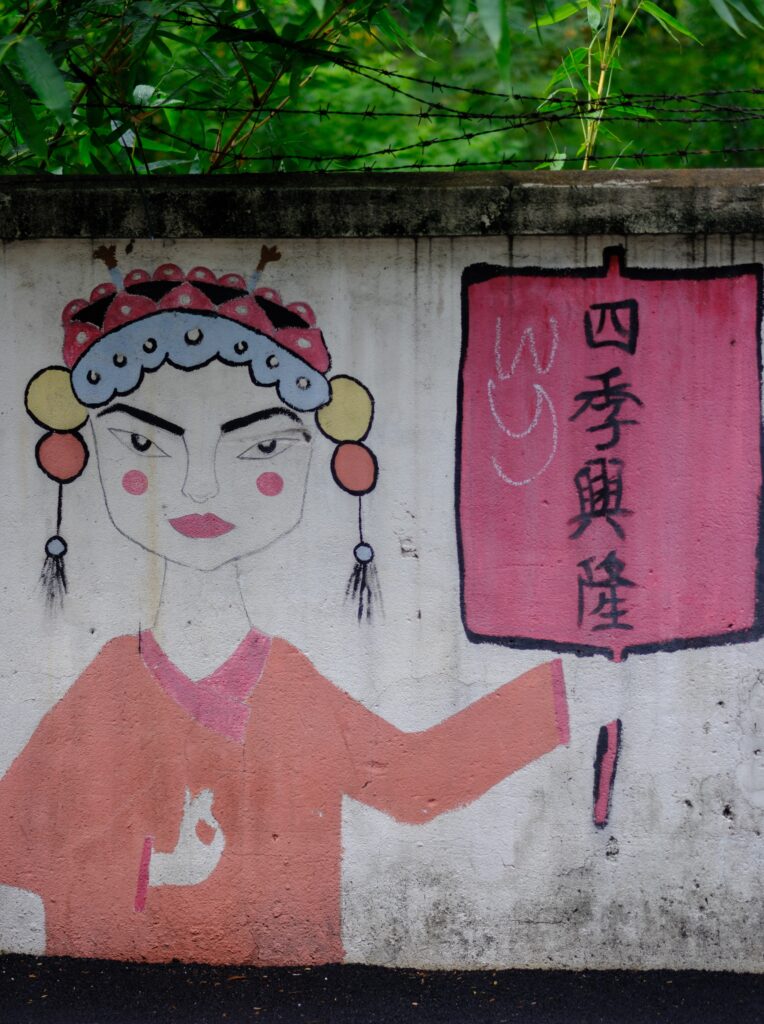
Morning in the cemetery park
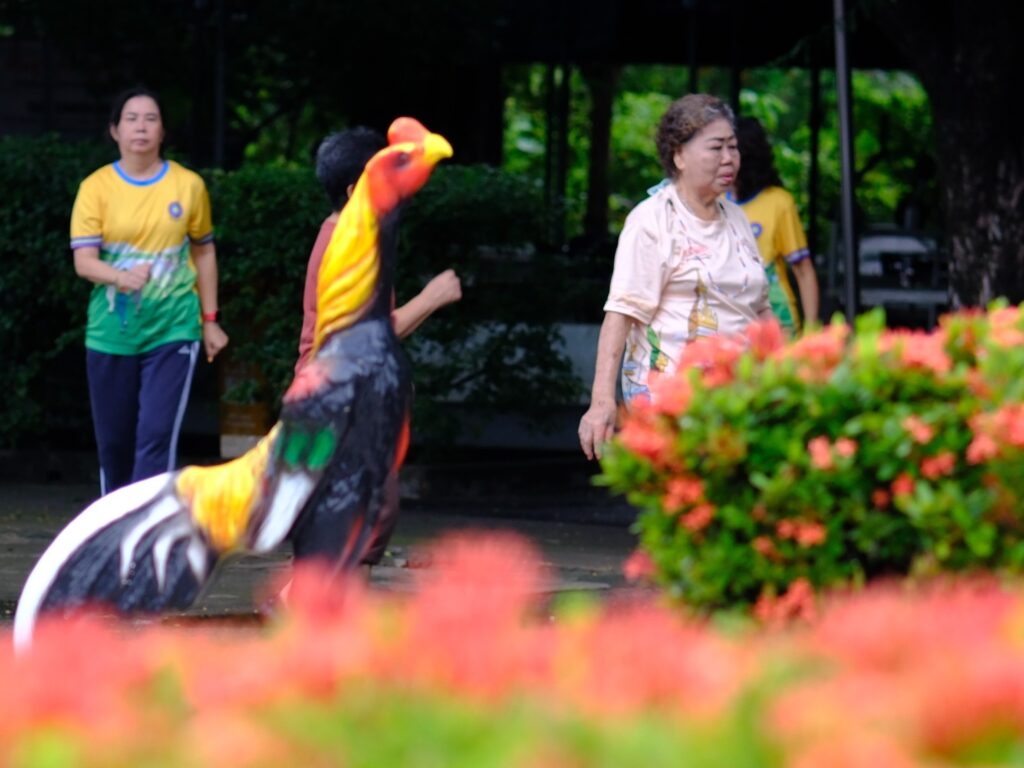
The park itself turns out to be a welcoming place, flooded with morning sun. The local runners, mostly elderly, are doing their morning rounds; a group of grandmothers is practicing tai chi; a company at the cafe is having breakfast and chatting away about something.
A park like any park – except that instead of the usual landscaping there are graves here, abandoned for the most part. It is slightly eerie and very interesting.
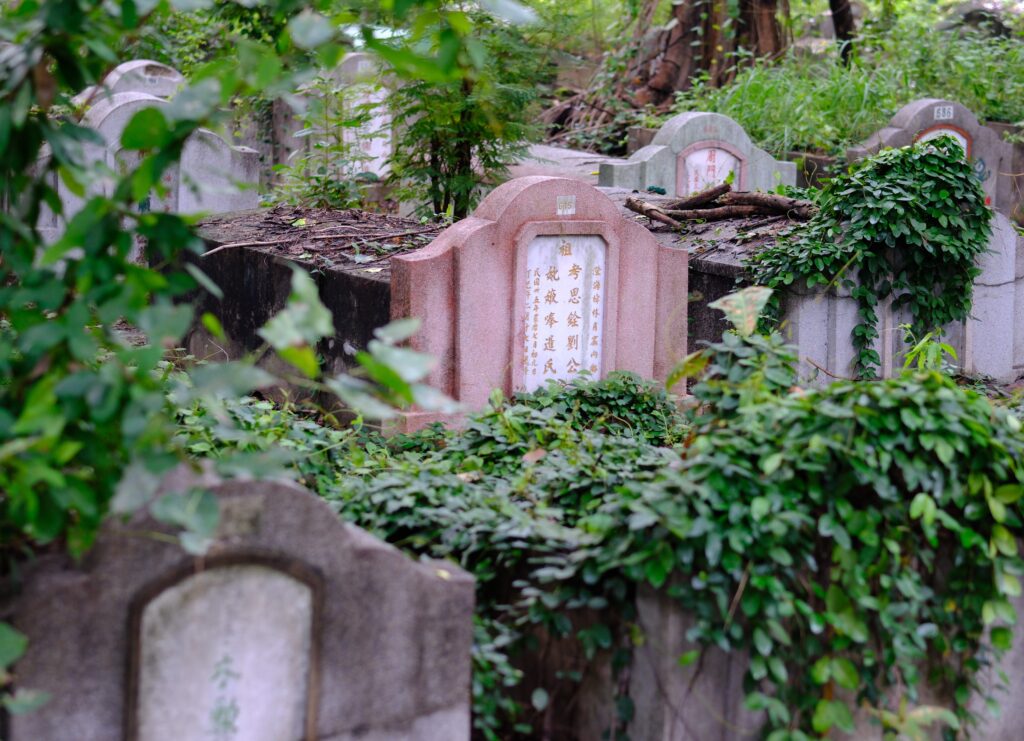
The graves are the classic southern Chinese horseshoe type – a curved mound, a low wall embracing the headstone, the whole oriented by feng shui. A few belong to wealthy families and are the size of small chapels.
The names – Teochew, Wat Don, Pa Cha
The park is called Teochew Cemetery Park (สุสานแต้จิ๋ว, Susan Taejiu).
Within a few hundred meters stand the Jawa Mosque, a Hindu Vishnu temple and Wat Don itself – four faiths sharing one block.
A short history of the Teochew Cemetery
1899: founded under Rama V as a resting place for migrants whose bones could not be sent home to China. Many were buried nameless – nobody came to claim them.
It is in fact three cemeteries side by side, run by the Teochew Association of Thailand, the Poh Teck Tung Foundation – the charity that collects the city’s unclaimed dead and accident victims – and the Hainan Dan Family Association. Around 7,000 graves survive on some 85 rai – 105 by other counts.
Late 1950s to early 1960s: under Field Marshal Sarit the grounds served as an execution site; later the place became known for suicides. Taxi drivers refused to drop passengers nearby.
1996: the Sathon district office and the Teochew Association – after consulting spirit mediums and community elders – reopened it as a public park. The land is still private; the city supplies the gardeners.
Move your ancestors by 2025
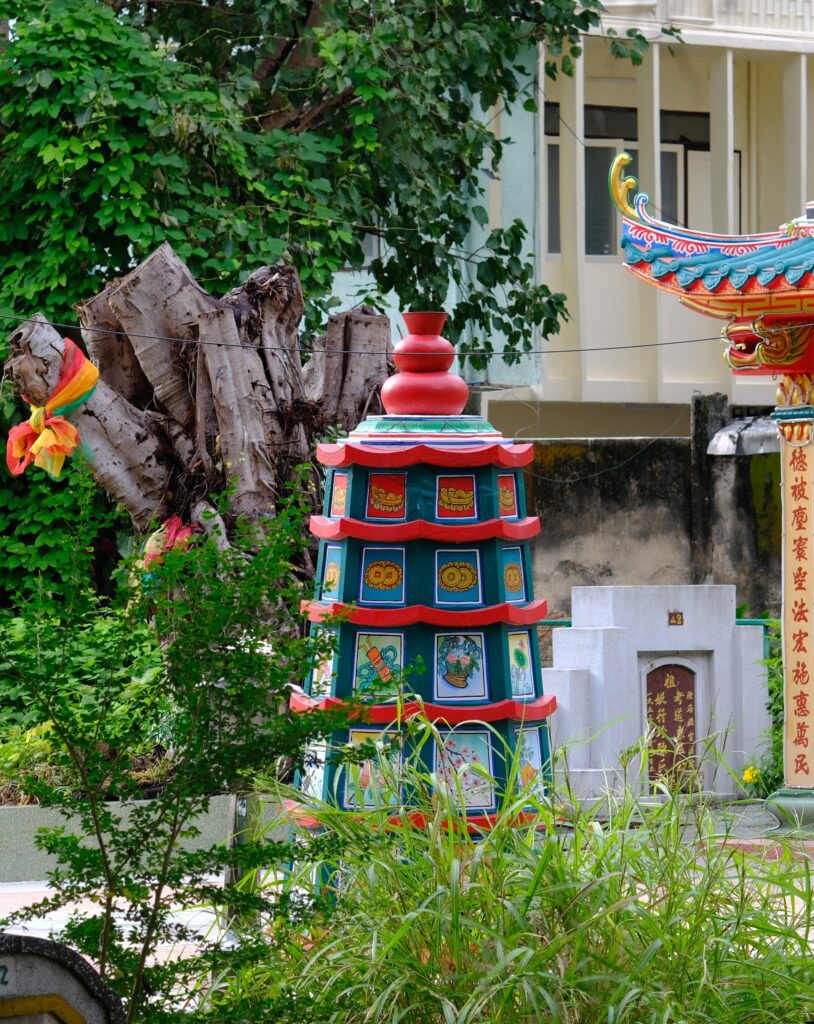
In 2024 the Teochew Association, which owns the land, put up large bilingual notices in the cemetery and in the press: descendants were to move their ancestors by 2025, free of charge – either into a new columbarium (locals call it the “bone condo”) or to the association’s Singthong Cemetery in Sriracha, a hundred kilometers away. Graves not claimed by the deadline would be moved into a mass plot. The declared plan: turn the whole site into a park, and set aside part of it for commercial development.
A descendants’ group – “Oppose the Demolition of the Teochew Cemetery, Sathon” – formed to gather the families, and in April 2025 the matter went to the House committee on religion, art and culture.
Where it stands today
The graves are still there, the deadline has passed, and no demolition has been announced. But something tells me that such a choice piece of land will not go unnoticed for long. So if you want to walk through a cemetery park, I would advise not putting it off.