
Cards
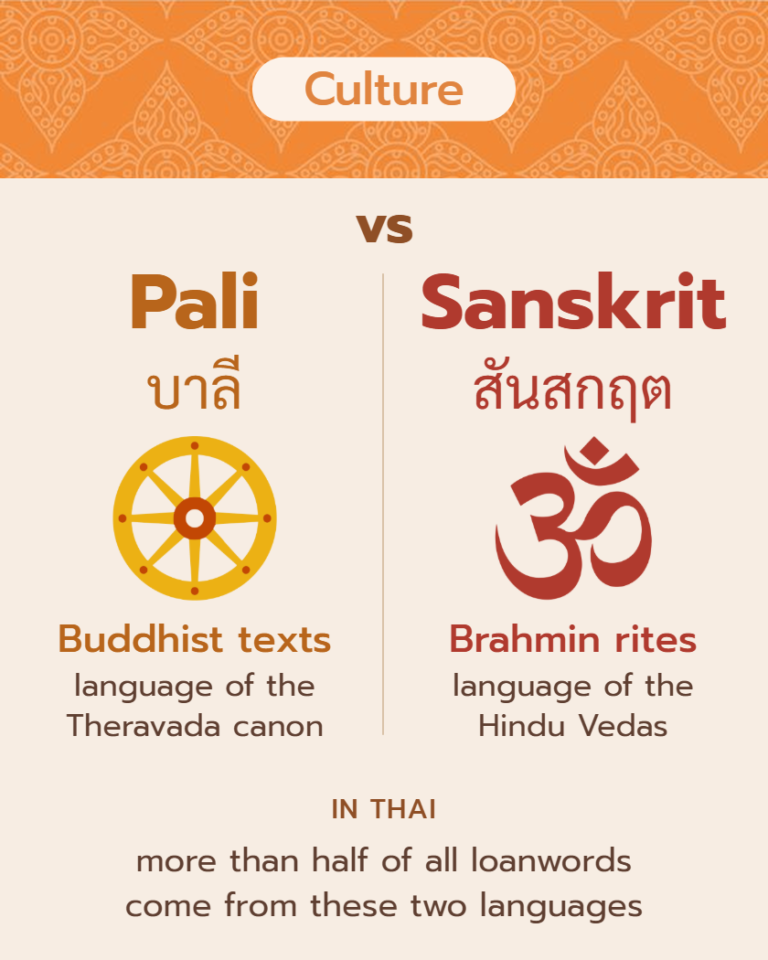 Pali vs Sanskrit: How Two Indian Languages Shaped Thai
More than half of the loanwords in Thai come from Pali and Sanskrit, two classical languages of India. This is how they differ, how they reached Thailand, and why Thai often keeps the same word in both forms.
 Jai Yen Yen (ใจเย็นๆ): The Thai Way to Say Calm Down
Jai yen yen means “calm down” in Thai. Thais say it to someone who is getting angry or in a hurry. Literally, it means “cool heart”.
 Loi Krathong (ลอยกระทง): Thanks and Apology to the Water
Loy Krathong means “floating the krathong”, a small boat of banana leaves with a candle and incense. On the full moon of the 12th Thai month, Thais float it to thank the water and to apologise for polluting it.
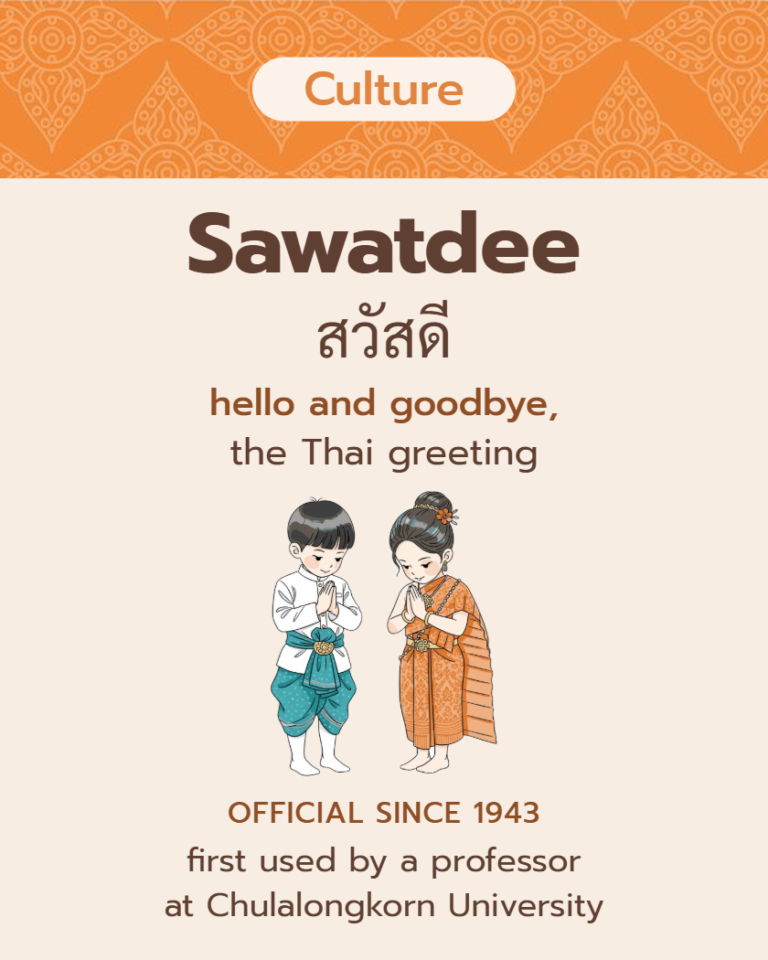 Sawatdee (สวัสดี): The Thai Greeting Invented in the 1930s
Sawadee is the first Thai word most visitors learn, but it has been a greeting for less than a hundred years. A Thai professor created it in the 1930s, and the government made it official in 1943.
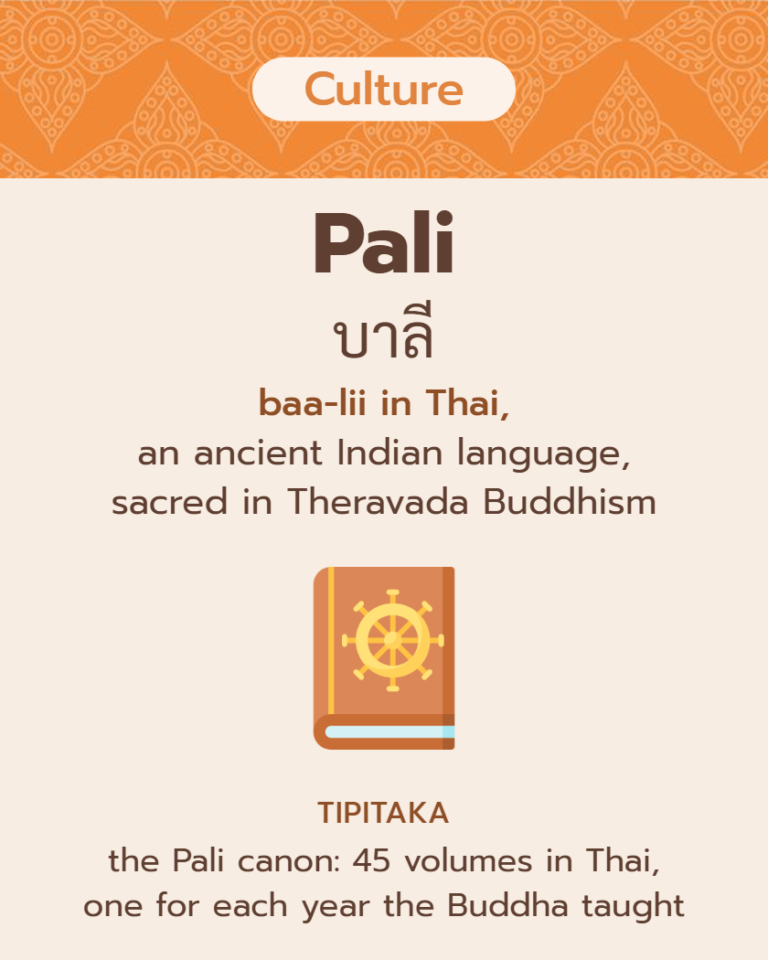 Pali Language (ภาษาบาลี): The Language of Thai Buddhism
The Pali language, บาลี (baa-lii) in Thai, is the language of the Theravada Buddhist scriptures. Nobody speaks it at home, but Thai monks chant it, study it in nine exam grades and print its canon in Thai letters.
 Pink Trumpet Tree (ชมพูพันธุ์ทิพย์): Meaning of the Thai Name
The pink trumpet tree is called ชมพูพันธุ์ทิพย์ (chom-phuu phan-thíp) in Thai. ชมพู means pink, and พันธุ์ทิพย์ is the name of the woman who first planted it in Thailand.
 Thai Mango (มะม่วง): Unripe and Ripe
Thai mango, มะม่วง (má-mûang), is eaten in two ways. มะม่วงดิบ is unripe and eaten with sweet fish sauce. มะม่วงสุก is ripe and eaten with sticky rice. The words also mean raw and cooked.
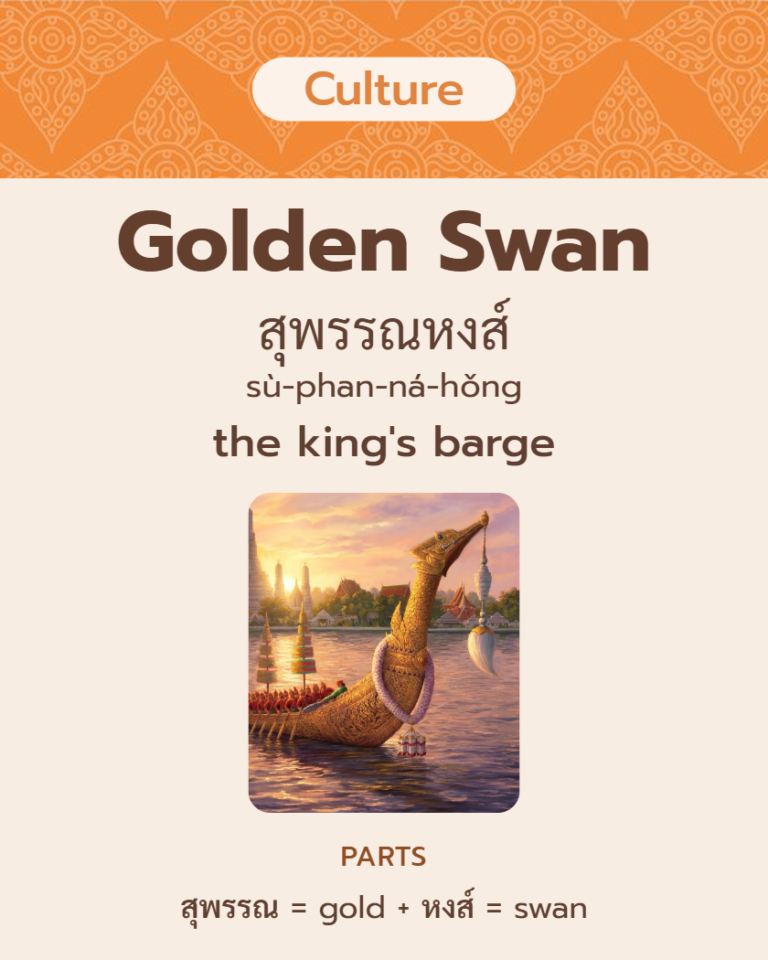 Royal Barge Suphannahong (สุพรรณหงส์): The Golden Swan
The royal barge Suphannahong, สุพรรณหงส์, is the golden swan the King of Thailand sits in. The name goes back to Ayutthaya in 1548. The barge on the river today was launched in 1911.
 Ramakien (รามเกียรติ์): The Thai Ramayana
Ramakien, รามเกียรติ์, is the Thai Ramayana. The name means “the glory of Rama”. It was rewritten at the court of Rama I after Ayutthaya burned: a Hindu epic in a Buddhist country, kept alive by the court, temple walls and masked dance.