Food
 Thai Mango (มะม่วง): Unripe and Ripe
Thai mango, มะม่วง (má-mûang), is eaten in two ways. มะม่วงดิบ is unripe and eaten with sweet fish sauce. มะม่วงสุก is ripe and eaten with sticky rice. The words also mean raw and cooked.
 Durian Meaning (ทุเรียน): The Thorny One
Durian means “the thorny one”, from Malay duri, thorn. Thai took the word as ทุเรียน. The fruit isn’t Thai either: it comes from Borneo and Sumatra.
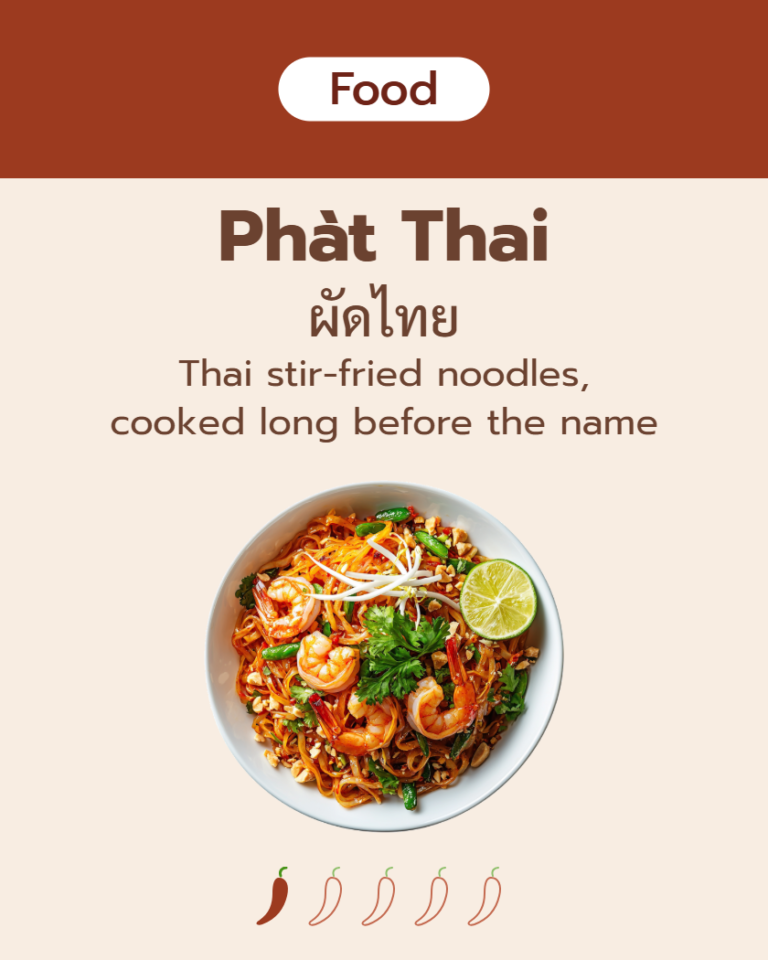 Pad Thai Origin and Meaning (ผัดไทย)
Pad thai means “Thai stir-fry”. The dish was cooked before 1942, the name appeared after, and Phibun did not invent either.
 Cha Yen (ชาเย็น): What Is Thai Tea, and Why Is It Orange?
What is Thai tea? Chaa yen (ชาเย็น), “cold tea”: strong black tea with condensed milk over ice. Why is Thai tea orange? Food coloring, not the tea.
 Longan vs Lychee (ลำไย vs ลิ้นจี่): How to Tell Them Apart
Longan (ลำไย) vs lychee (ลิ้นจี่): two fruit cousins from one family. Longan is small with smooth brown skin, lychee is bigger with bumpy red skin.
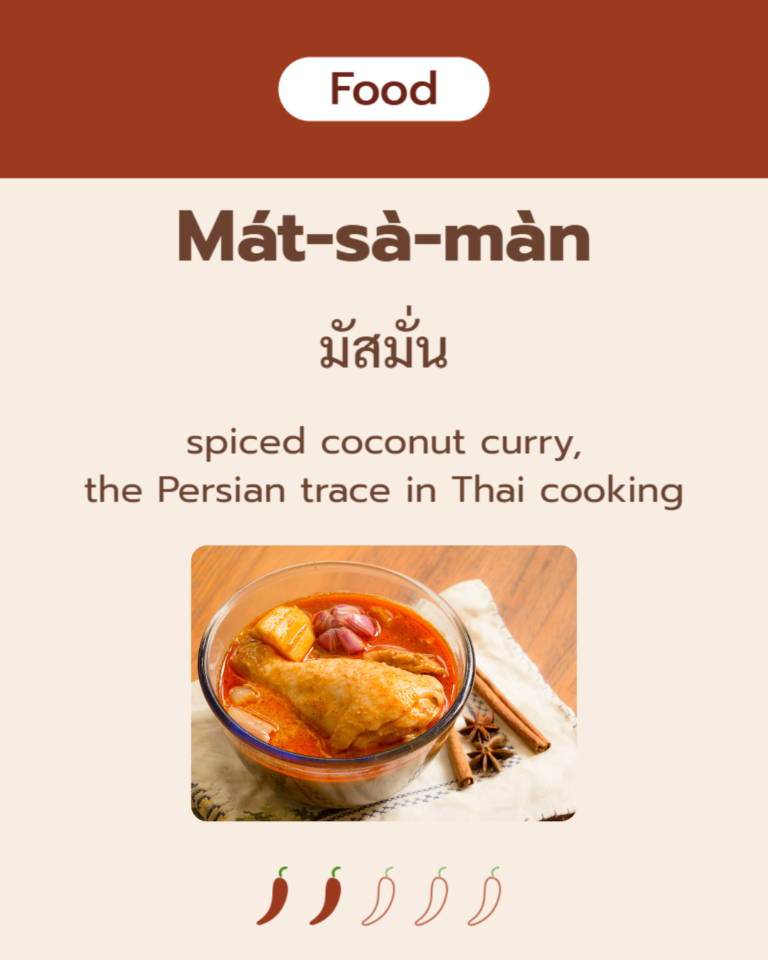 Massaman (มัสมั่น): the Thai Curry with a Persian Name
Massaman – a mild Thai coconut curry with peanuts and potatoes, and a name that traces back to Persia.