

Durian Meaning (ทุเรียน): The Thorny One
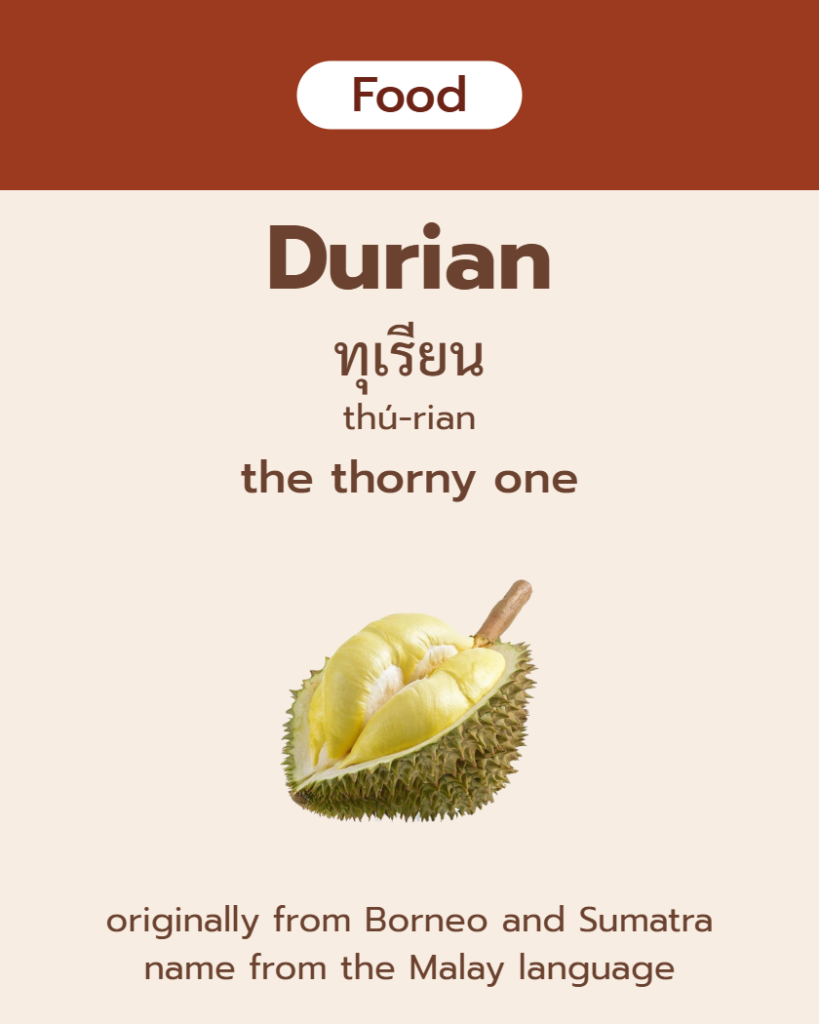
The durian meaning is in the husk. Durian, in Thai ทุเรียน (thú-rian), means “the thorny one”.
Durian meaning: from Malay duri
The word is Malay: duri is a thorn, and -an turns it into a noun, so the thing with thorns. English first recorded it in 1588, in a translation of a Spanish book about China. Older spellings include durion, duryoen and dorian.
Thai ทุเรียน is the same word, adapted to Thai sounds. One writer in Silpa Wattanatham argues for a Mon origin, but leaves the question open. Most sources go with Malay.
The civet in the Latin name
The botanical name is Durio zibethinus. Durio is the Malay word in Latin form. Zibethinus refers to the civet. Whether the name points to the smell or to civets eating the fruit, the sources don’t agree.
Thai durian varieties and their names
The Thai variety names are just as literal:
- หมอนทอง (mǎawn-thaawng, Monthong) – golden pillow. It’s the most sold, with mild, creamy flesh.
- ก้านยาว (kâan-yaao) – long stem. It’s rarer and more expensive.
- ชะนี (chá-nii) – gibbon. It’s the hardiest.
What does durian taste like?
In 1856, the naturalist Alfred Russel Wallace called it “a rich custard highly flavoured with almonds”, with “occasional wafts of flavour that call to mind cream-cheese, onion-sauce, sherry-wine, and other incongruous dishes”. He thought it worth a voyage to the East.
Durian origin: not originally Thai
Durian comes from Borneo and Sumatra. In Thailand it’s cultivated, not native. How it got to Siam is disputed. In one account, Rama I’s army brought it back from Tenasserim, in today’s Myanmar, in 1787. In another, it came up through the south, via the Malay Peninsula.
The first written record in Siam is older than both: La Loubère, the French envoy to Ayutthaya, mentions it in 1687.
References
- Durian – Wikipedia
- Durio zibethinus – GRIN Taxonomy (native range)
- ทุเรียนเมืองไทยมาจากไหน? ทำไมจึงเรียกว่าทุเรียน? – Silpa Wattanatham
- The Malay Archipelago – Alfred Russel Wallace, Project Gutenberg