

Cha Yen (ชาเย็น): What Is Thai Tea, and Why Is It Orange?
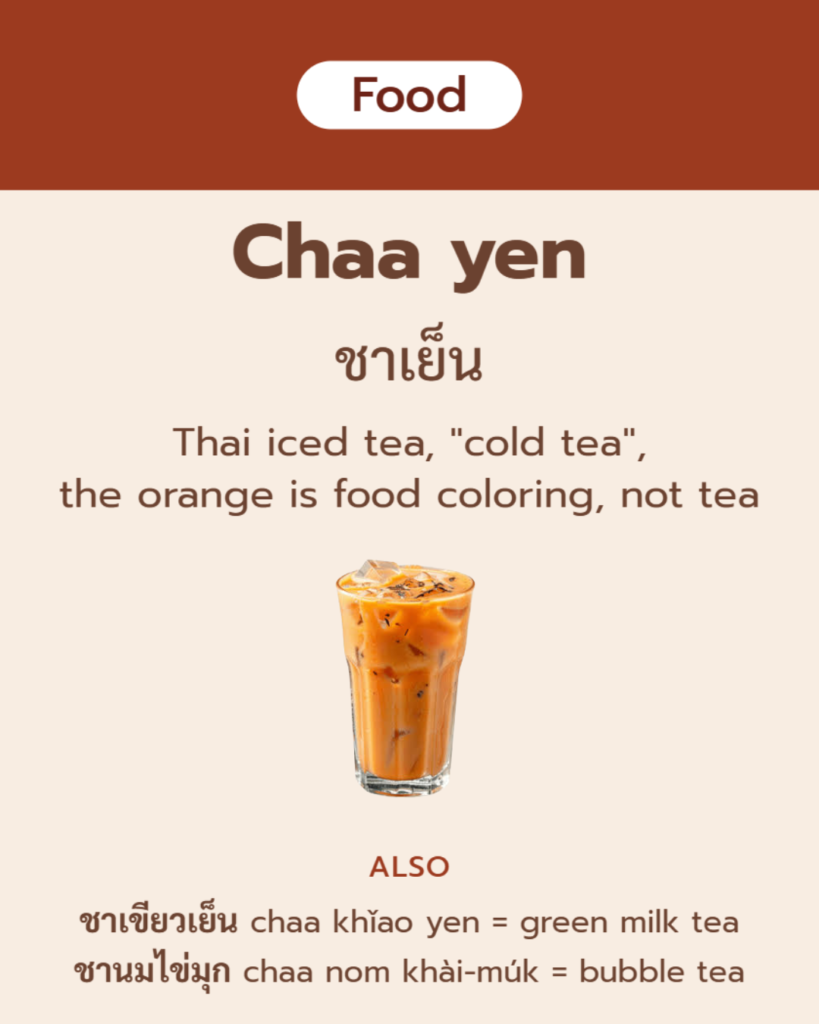
What is Thai tea? In Thailand it’s chaa yen (ชาเย็น ), Thai iced tea, literally “cold tea”: strong black tea, sweetened with sugar and condensed milk, poured over ice and topped with evaporated milk. On the street it comes in a tall plastic cup or a plastic bag with a straw.
What is Thai tea made of?
The base is strongly brewed black tea. Ceylon tea is the classic choice, but it’s expensive, so many mixes use a local Assam tea called Bai Miang instead. The sugar and condensed milk go in hot. The evaporated milk goes on top, over the ice, which gives the drink its two-tone look. That creamy version is the Thai milk tea most people know abroad.
Why is Thai tea orange?
Not because of the tea. The bright orange comes from food coloring mixed into the tea blend, most often Sunset Yellow (E110). Brewed without it, the tea is a deep reddish-amber, and with milk it turns a pale caramel. Older recipes used natural ingredients such as roasted tamarind seeds.
Where Thai tea comes from
Nobody knows exactly who first made it. One brand did much to make it famous: ChaTraMue ชาตรามือ , started by a Teochew Chinese family who opened a tea shop in Bangkok’s Chinatown in 1925. Hot Chinese tea sold poorly in the heat, so they switched to iced black tea and iced milk tea. The ChaTraMue brand dates from 1945, and its sweet orange milk tea is the one most of the world now knows as Thai tea.
Other kinds of chaa yen
At a Thai tea stall the menu usually goes beyond the orange one:
- ชาเขียวเย็น (chaa khǐao yen) – green milk tea, bright green
- ชาดำเย็น (chaa dam yen) – iced black tea, sweetened with sugar but no milk
- ชามะนาว (chaa má-naao) – cha manao, iced black tea with lime and sugar
Chinese and Taiwanese tea in Thailand
Thai tea now has strong competition. Taiwanese bubble tea, ชานมไข่มุก (chaa nom khài-múk), “pearl milk tea”, is sold all over Thailand, from brands like KOI Thé. Since 2023, Chinese chains such as Mixue and Chagee have opened in Bangkok as well. They offer far more choice than a street stall, with fruit teas, toppings and adjustable sugar, and a lighter, less sweet taste than the classic orange tea.