

Farang Meaning (ฝรั่ง): Where the Thai Word for Westerners Comes From
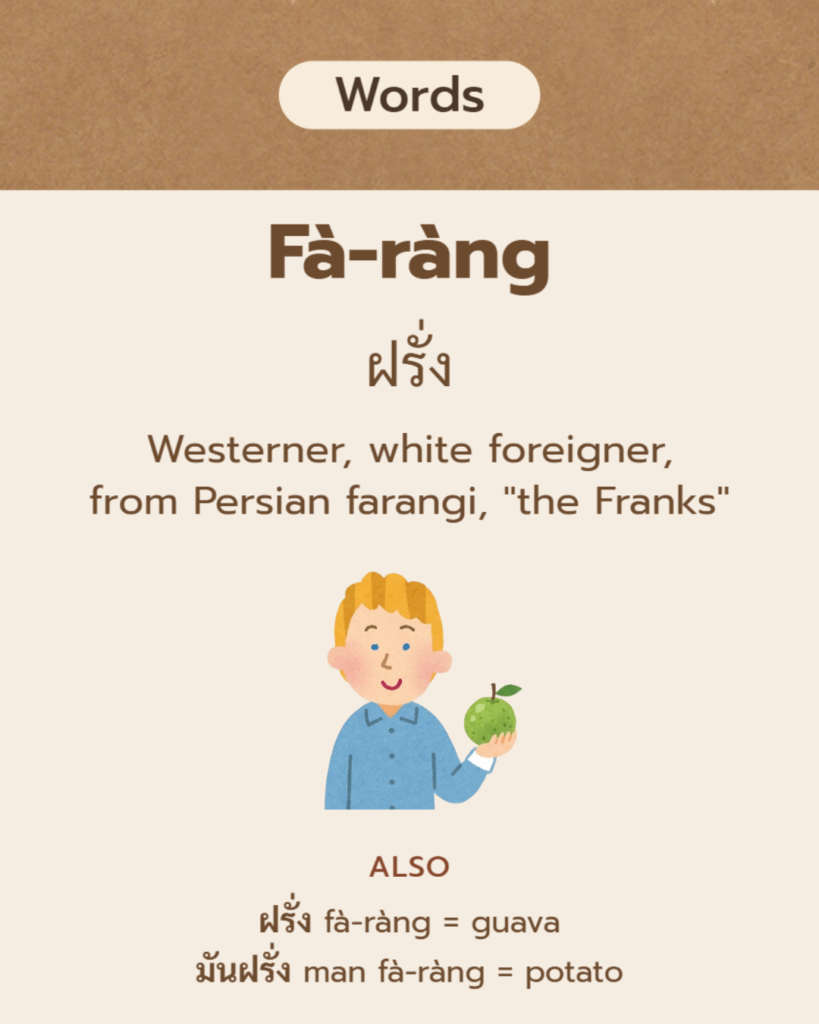
The farang meaning is simple: a Westerner, usually a white foreigner. Fà-ràng (ฝรั่ง ) is the first Thai word most visitors hear about themselves. The word itself didn’t start in Thailand.
What is a farang?
A farang is any Westerner who looks white, wherever they’re from. It goes by appearance, not passport. People looking for the Thai word for foreigner often find farang, but it doesn’t cover every foreigner in Thai.
Thai words for other foreigners
Thai has a word for each broad group:
- แขก (khàek) – Indians and other South Asians, and people from the Middle East. Literally “guest”, and a respectful word, linked to India as the land of the Buddha.
- เจ๊ก (jék) – originally Chinese traders. Today it can carry a slightly negative tone.
- คนเอเชีย (khon ee-chia) – East and Southeast Asians. For a known nationality, Thais say คน plus the country: คนญี่ปุ่น (khon yîi-pùn), a Japanese person.
- คนดำ (khon dam) – Black people, literally “black person”, whatever their nationality.
- ลูกครึ่ง (lûuk khrûeng) – people of mixed race, literally “half child”.
- คนต่างชาติ or ชาวต่างชาติ (khon or chaao dtàang châat) – any foreigner, the neutral general word.
None of these is rude when you’re talking about someone, but you don’t use them to address a person. For that, Thais say คุณ (khun).
Where the word comes from
Farang thai usage goes back to Persian. Farang or farangi first meant the Franks, the people of Western Europe who gave France its name. Arabic had a related word, Franj, for the European fighters of the Crusades. Over time the Persian word widened to all Europeans, then all Westerners, and it spread with trade into India and Southeast Asia.
English records the Thai farang, meaning “white person”, from 1861. The same root gave the Indian word feringhee, recorded in English in the 1630s. The Franks’ own name is thought to mean “free”.
Farang, guava and potato
ฝรั่ง is also the Thai word for guava. The fruit came from the Americas and was probably brought to Asia by Portuguese traders. One explanation is that it was named after the foreigners who brought it. Others say the two words are unrelated and just happen to sound the same. Potato is มันฝรั่ง (man fà-ràng), literally “farang tuber”.