

Pad Thai Origin and Meaning (ผัดไทย)
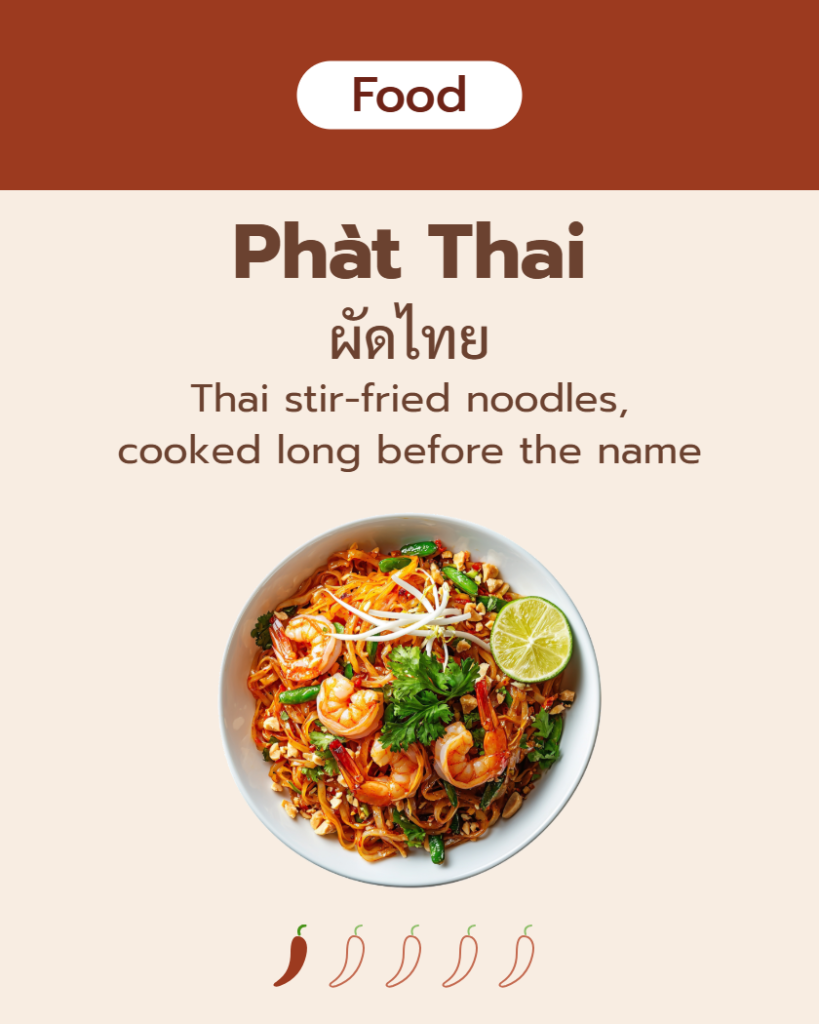
Pad thai,ผัดไทย (phàt thai), means “Thai stir-fry”. Its full name is ก๋วยเตี๋ยวผัดไทย (kǔay-tǐao phàt thai), Thai stir-fried noodles. The usual pad thai origin story credits Field Marshal Phibun and his government. The real story is longer.
What does pad thai mean?
The pad thai meaning is in its full name:
- ก๋วยเตี๋ยว (kǔay-tǐao) – rice noodles, from Chinese 粿條, the same word as kway teow in Singapore and Malaysia
- ผัด (phàt) – stir-fried
- ไทย (thai) – Thai
So the name says: Chinese rice noodles, stir-fried the Thai way. Stir-fried rice noodles came to Thailand with Chinese cooks. The Thai version added tamarind, fish sauce, palm sugar, dried shrimp and peanuts.
Pad thai origin: older than its name
In 1911, the cookbook แม่ครัวหัวป่าก์ (mâae khrua hǔa pàa) printed a recipe for ผัดเส้นก๋วยเตี๋ยว , stir-fried rice noodles. It is close to pad thai, but it doesn’t have the name.
Phibun and the 1942 noodle campaign
Pad thai history usually starts with Phibun. His government renamed Siam to Thailand in 1939 and spent the next years making the country more “Thai”, including the 1942 spelling reform.
In 1942, war and floods caused a rice shortage. The government’s answer was noodles:
- 5 November: newspapers launched a noodle campaign.
- 7 November: Phibun spoke on the radio. Noodles were cheap, nutritious and made locally, and if every Thai ate one bowl a day, the money would go to farmers and fishermen.
- 14 November: the newspaper ศรีกรุง (Sri Krung) printed eight noodle recipes. Two stir-fried ones look like pad thai’s ancestors, but none is called pad thai.
The government also gave Thai vendors interest-free loans, carts and bowls. Until then, noodle selling had been mostly in Chinese hands. By December, the campaign had faded from the papers.
So who invented pad thai?
Nobody we know of. The dish existed before Phibun, and the earliest documented use of the name ผัดไทย found so far is from 1962, twenty years after his campaign. Phibun’s daughter has said her father didn’t know the dish and didn’t name it. His government did push noodles, and did push “Thai”, and over time the two stories merged into one.
How pad thai went abroad
A government did help pad thai later. From 2001, the Global Thai programme promoted Thai food abroad, aiming for thousands of Thai restaurants worldwide. Pad thai led the menu, which is why many foreigners know it as the Thai dish.
References
- เปิด 8 ตำรับ ก๋วยเตี๋ยว จอมพล ป. ‘มรดกจานด่วน’ คณะราษฎร – The101.world
- สุดย้อนแย้ง เมนู “ก๋วยเตี๋ยวผัดไทย” ใครบอกว่า “จอมพล ป.” คือผู้คิดค้น – Thairath
- ผัดไทยจอมพล ป. ผัดไทยที่ จอมพล ป. ไม่รู้จัก – OKMD Knowledge Portal
- Kuai tiao – Wikipedia
- Pad thai – Wikipedia