

Prát-chá-yaa (ปรัชญา)
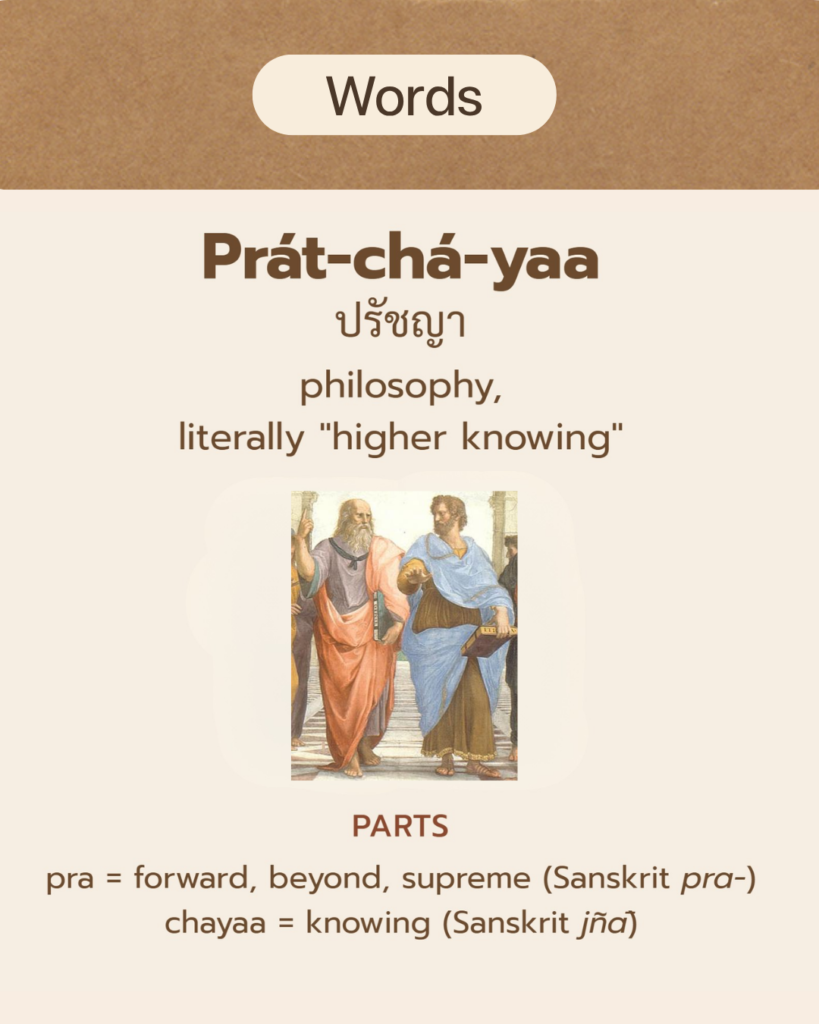
Prát-chá-yaa (ปรัชญา ) means philosophy.
ORIGIN: Sanskrit prajñā, “wisdom, insight.”
PARTS: pra = forward, beyond; jñā = to know.
LITERALLY: knowing that goes further.
The same root reached Thai twice. Through Pali it became ปัญญา (pan-yaa), the everyday word for intelligence and the Buddhist virtue of wisdom. Through Sanskrit it kept its harder consonants, and in the 20th century scholars — usually credited to Prince Wan Waithayakon, who coined much of Thailand’s academic vocabulary — gave this grander form a new job: translating the Western idea of “philosophy.”
So a Thai philosopher and a wise village elder share one ancient word, split into two.
Further back, jñā is a cousin of English know and Greek gnosis: the same syllable has been doing this work from Ireland to India for five thousand years.
Example:
เขาเรียนปรัชญาที่จุฬาฯ
Kháo rian prát-chá-yaa thîi Jù-laa.
He studies philosophy at Chula.