

Rattana (รัตนะ): the Jewel in Thai Names
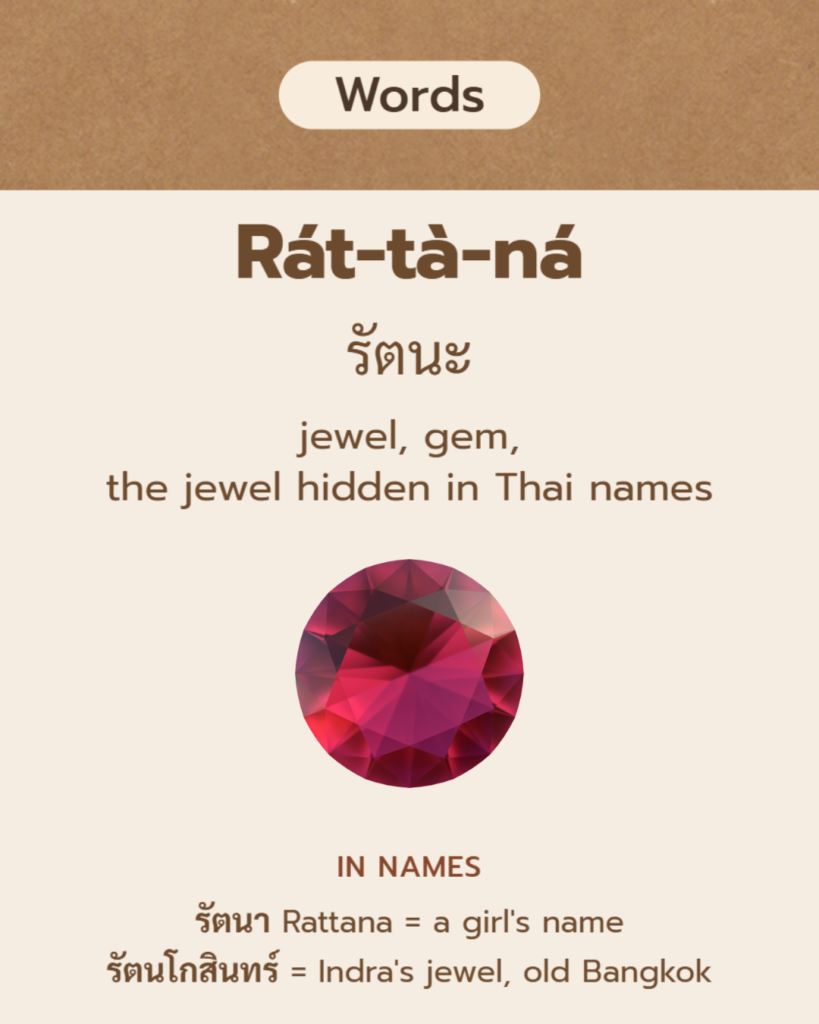
Rattana – in Thai รัตนะ , rát-tà-ná – means a jewel: something precious and rare.
ORIGIN: Pali ratana, from Sanskrit ratna – first “a gift,” then “wealth,” then “jewel.”
LITERALLY: a jewel, a treasure.
The word’s history runs from giving to keeping. Sanskrit ratna comes from a root meaning “to give,” and its oldest sense is a gift or a valued possession; only later does it narrow to a gem, and then to “the best of its kind.” Pali commentators read it differently, linking it to rati, delight: a jewel is what brings joy, “of great value, immeasurable, and hard to find.”
Thai keeps both senses. On its own รัตนะ is a precious gem or anything held to be exceptional. Attached to another word, it makes that word the finest of its kind: บุรุษรัตน์ (bù-rùt-sà-rát) is an outstanding man, นารีรัตน์ (naa-rii-rát) an outstanding woman. At the end of a word it shortens to รัตน์ (rát).
That is why it turns up in so many Thai names. Rattana (รัตนา, rát-tà-naa) is a girl’s name in its own right, and รัตน์ closes a long list of given names and surnames – a quiet way of calling someone precious.
It is in the names of places too. Bangkok’s old royal island is รัตนโกสินทร์ (rát-tà-ná-koo-sǐn), Rattanakosin, “the jewel of Indra” – a reference to the Emerald Buddha, the city’s guardian image. The full ceremonial name of Bangkok uses the word twice: อมรรัตนโกสินทร์ , the immortal jewel of Indra, and นพรัตน (nóp-phá-rát), the nine gems.
In Buddhism, the Buddha, the Dhamma and the Sangha are the รัตนตรัย (rát-tà-ná-trai), the Triple Gem – also called ไตรรัตน์ (trai-rát), three jewels.