

Sabai Meaning (สบาย): Thai for Well, Comfortable, At Ease
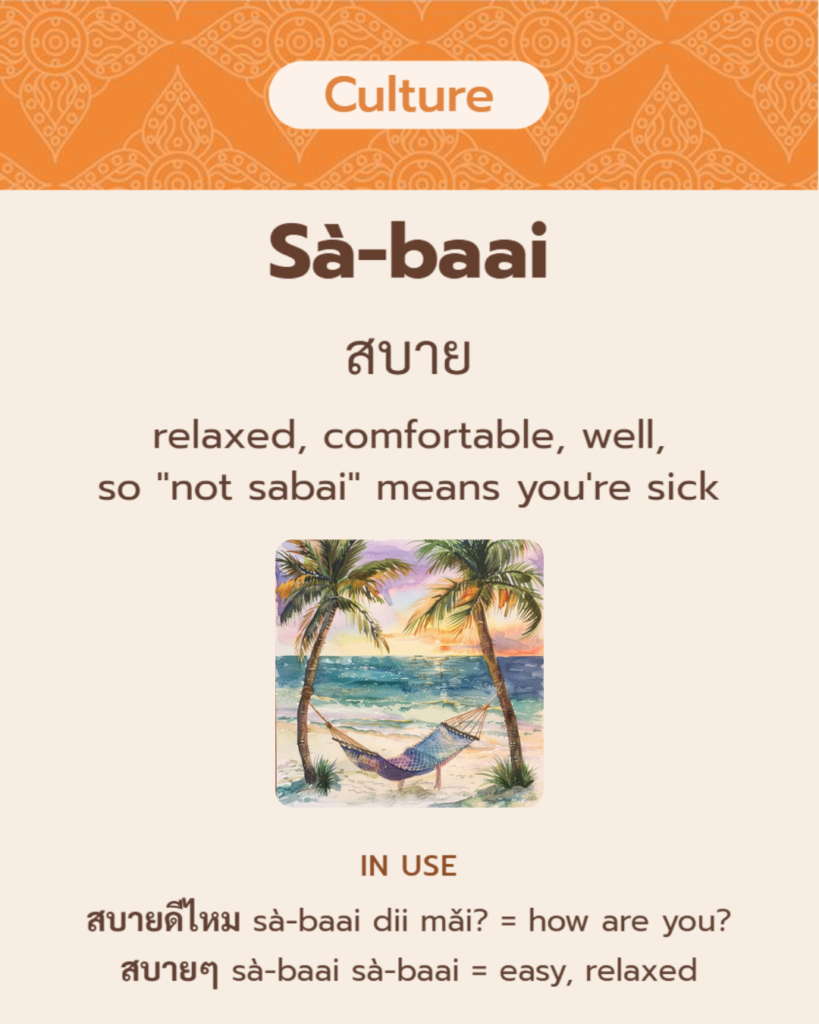
The meaning of sabai (สบาย , sà-baai) is well, comfortable and at ease. It’s one of the first Thai words visitors learn, usually doubled as sabai sabai.
Origin
Sabai comes from the Pali word sappāya (สปฺปาย). Pali is the language of the Theravada Buddhist scriptures. In Pali, sappāya means suitable, beneficial or fit. In Buddhist texts it describes the conditions that suit meditation, such as senāsana-sappāya, “suitable lodging”.
So the word began as “what suits you” and ended up as “how you feel when things suit you”. When Thai adopted it, the spelling was cut down to สบาย.
What does sabai mean in Thai?
The Royal Institute dictionary lists six senses:
- living well, well-off: เดี๋ยวนี้เขาสบายขึ้น , “he’s better off now”
- convenient, easy: สะดวกสบาย sà-dùak sà-baai
- just right, a good fit: a chair that’s sabai to sit in
- free of physical hardship
- free of illness
- pleasant to the senses
That fifth sense explains mâi sà-baai (ไม่สบาย ). “Not sabai” is the everyday way to say you’re sick, because “free of illness” is part of the word itself.
The last sense builds a small family of words, with sabai fixed to a part of the body:
- สบายตา sà-baai taa – easy on the eyes
- สบายหู sà-baai hǔu – pleasant to listen to
- สบายใจ sà-baai jai – at ease in your mind (jai = heart, mind)
- สบายตัว sà-baai tuua – comfortable in your body
Sabai sabai meaning
Sabai sabai (สบายๆ ) means easy, relaxed, no rush. The sign ๆ tells you to say the word twice.
In use
- สบายดีไหม sà-baai dii mǎi? (sabai dee mai) – how are you?
- สบายดี sà-baai dii (sabai dee) – I’m fine
Sources: