

Loi Krathong (ลอยกระทง): Thanks and Apology to the Water
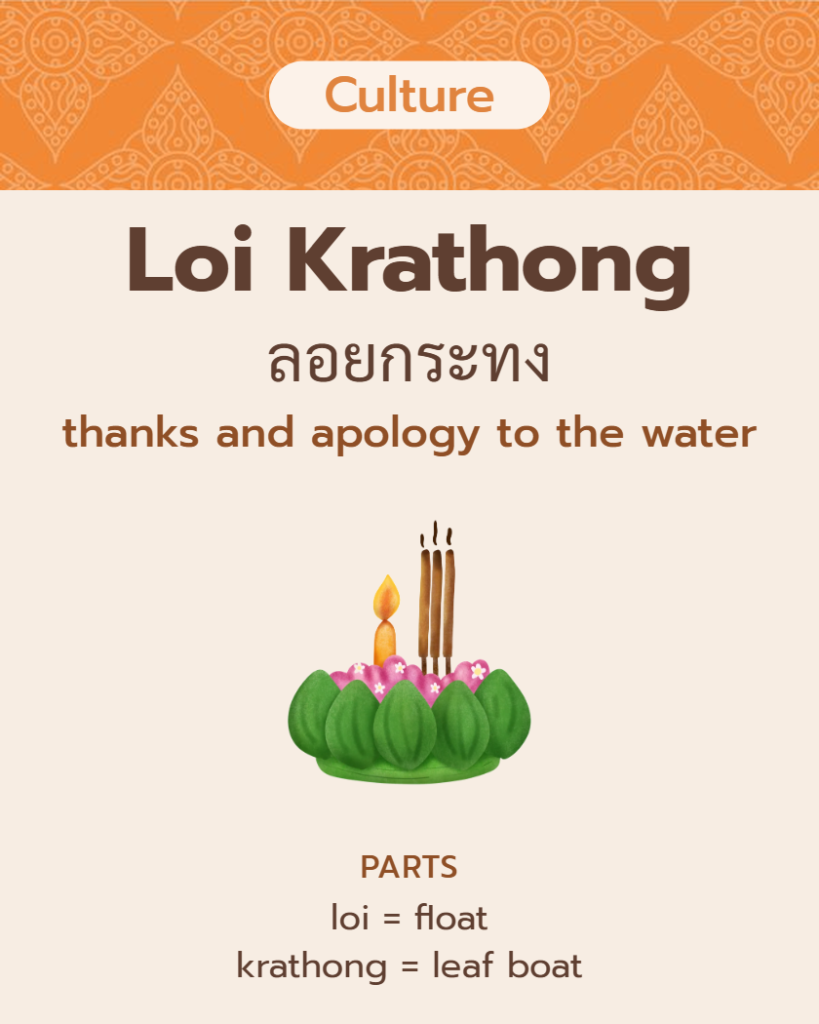
Loy Krathong (ลอยกระทง ) is one of the most loved nights of the Thai year. On the full moon of the 12th month of the Thai lunar calendar, usually in November, people gather at rivers, canals and ponds and set small candle-lit boats on the water.
The name is written in English as Loy Krathong or Loi Krathong. Loi is the official spelling in the Royal Thai General System of Transcription (RTGS), and Loy is the more common spelling.
What the Name Means
Loi (ลอย ) means “to float”. Krathong (กระทง ) is a small vessel made of leaves. In everyday Thai, the word also means the banana-leaf cups used for food and offerings. A festival krathong is usually built on a slice of banana trunk, with folded banana leaves around it in the shape of a lotus. On top go flowers, a candle and incense, the same offerings Thais bring to a temple.
Why Thais Float a Krathong
The ritual has several layers. The oldest is a thanks to the water, which gives rice and life, and an apology for using and dirtying it during the year. Later, this water spirit took the name Phra Mae Khongkha (พระแม่คงคา ), the Thai form of Ganga, the Hindu goddess of the Ganges River.
Buddhism added its own meaning. The krathong also honours the footprint the Buddha left on the bank of the Nammathanati River in India, and his hair relic in the Tavatimsa heaven.
Many people also put a few strands of hair, a nail clipping or a coin into the krathong. As it floats away, it is believed to carry off bad luck and anger from the past year. It is said that if the candle burns until the krathong is out of sight, the coming year will be lucky.
The Sukhothai Legend
Most guides say the festival began in Sukhothai, when Nang Nopphamat, a royal consort, made the first lotus-shaped krathong. The story comes from a book that Prince Damrong, the founder of modern Thai history writing, dated by its language to the reigns of Rama II and Rama III, in the early 1800s. The book even mentions Western nations that had not yet reached Siam in the Sukhothai period.
How Much Waste Loy Krathong Leaves
The traditional apology recited to Mae Khongkha lists the ways people pollute the water, from dishwater to household waste. Yet each year the apology itself has to be collected. After Loy Krathong 2025, the Bangkok Metropolitan Administration (BMA) collected 391,027 krathongs from 110 sites between 8 p.m. and 5 a.m. About 83% were made of natural materials, 10% of bread and 7% of foam. In 2017 the number was 811,945, so Bangkok now floats about half as many krathongs as it did then.
References
- Department of Cultural Promotion: Loy Krathong Tradition (PDF)
- Thailand Foundation: Loy Krathong Festival, All You Need to Know
- Silpa Wattanatham: หรือว่า “นางนพมาศ” จะเป็นวรรณกรรมหลงยุคแห่งกรุงรัตนโกสินทร์?
- Khaosod: ไม่เคยมีลอยกระทงสมัยสุโขทัย
- The Nation: BMA collects 391,027 krathongs in 2025 Loy Krathong festival
- The Nation: Number of krathong floats in Bangkok continues to drop over eight years