

Kalathesa (กาลเทศะ): the Thai Sense of Time and Place
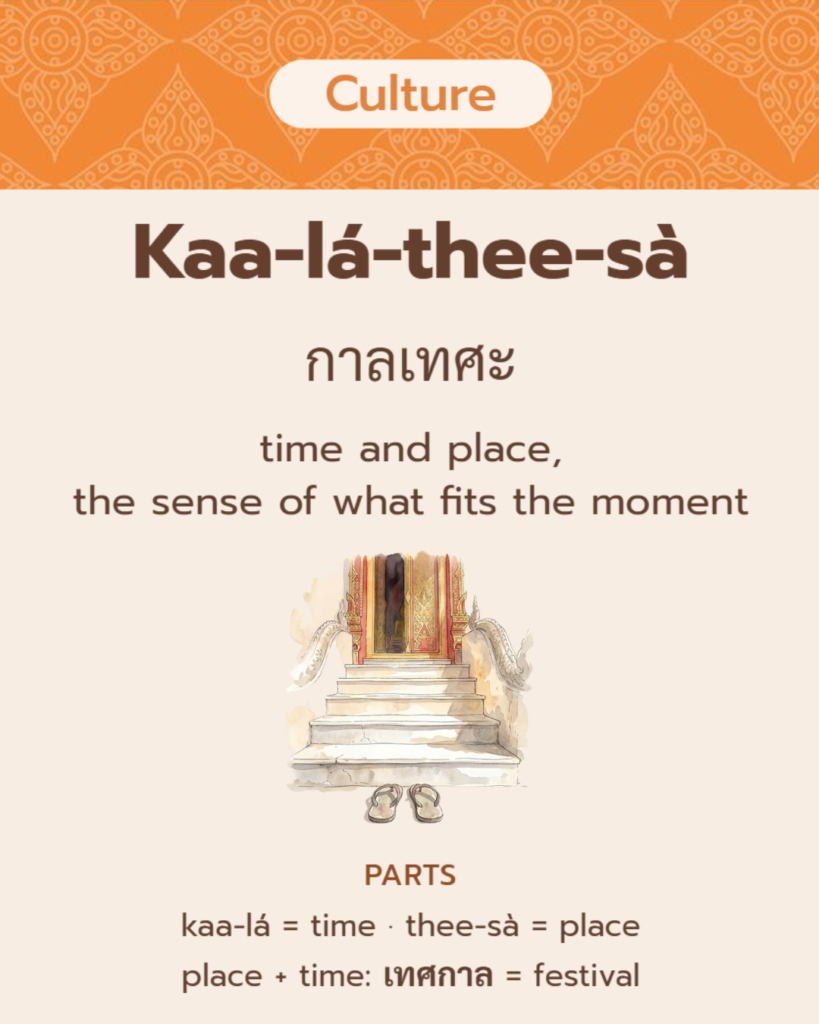
Kalathesa – in Thai กาลเทศะ , kaa-lá-thee-sà – means “time and place,” and in everyday Thai, the sense of what is fitting.
ORIGIN: Sanskrit and Pali, kāla + desa.
PARTS: กาล (kaa-lá) = time, เทศะ (thee-sà) = place.
LITERALLY: time and place.
The second meaning is the one Thais use. To know kalathesa is the heart of Thai etiquette: reading a situation and acting in a way that suits it. The same joke, outfit or tone of voice can be right at a party and wrong at a temple, fine between friends and out of place in front of an elder or a monk. Someone who gets it wrong is ไม่รู้กาลเทศะ (mâi rúu kaa-lá-thee-sà), “doesn’t know time and place” – tactless.
The Thai sense goes further than its source. In Pali the phrase means only “time and place.” Thai added the judgement: not just where and when you are, but what that asks of you.
Swap the two words and you get a different idea entirely: เทศกาล (thêet-sà-kaan), place and time, means a festival. Same two words, opposite order – one tells you how to behave, the other gives you a reason to celebrate.
Kalathesa sits close to kreeng jai. Kreeng jai holds you back from imposing on someone; kalathesa tells you what the moment allows.