

Nák-gaan-meuang (นักการเมือง)
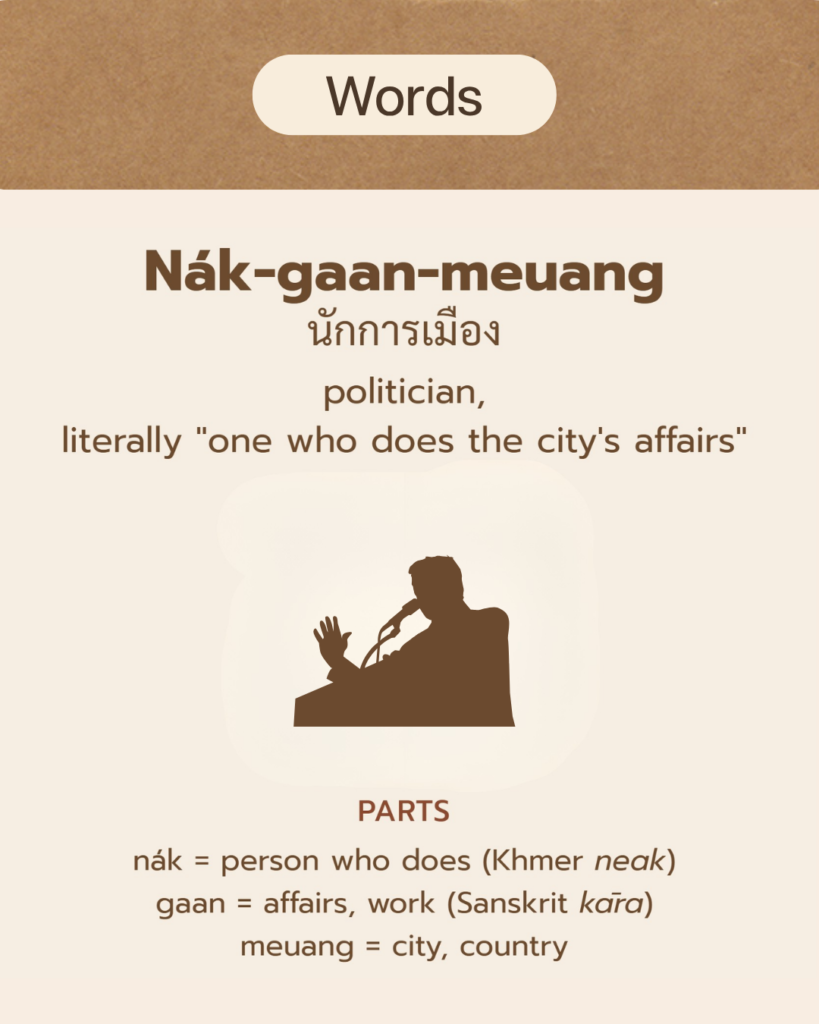
Nák-gaan-meuang (นักการเมือง ) means politician.
ORIGIN: Thai compound, nák + gaan-meuang.
PARTS: nák = person who does (from Khmer neak, “person”), gaan = affairs, work (Sanskrit kāra), meuang = city, country.
LITERALLY: one who does the city’s affairs.
The word is a mirror of its English cousin. “Politics” comes from Greek polis, the city, so a politician was someone who ran the city’s business. Thai arrived at exactly the same picture from its own parts: gaan-meuang is “city affairs,” and nák turns any activity into a person — a nák-rian learns, a nák-rong sings, a nák-tong-thiao travels. Note also meuang, one of Thai’s oldest native words: it meant a walled town and the land it ruled long before it meant a nation.
Sentence:
นักการเมืองคนนี้พูดเก่งมาก
Nák-gaan-meuang khon níi phûut gèng mâak.
This politician is a very good speaker.