

Pao mai (เป้าหมาย): the target you aim at
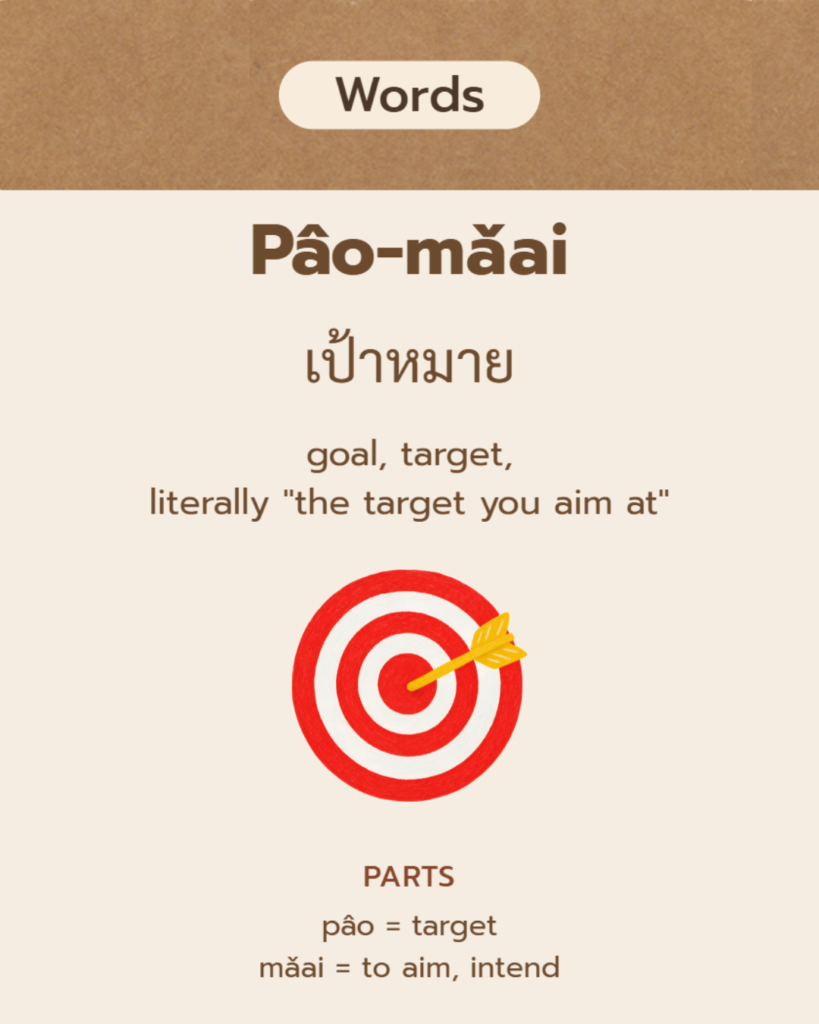
Pâo-mǎai (เป้าหมาย ) means goal, target.
PARTS: pâo (เป้า) = target; mǎai (หมาย) = to aim, intend.
LITERALLY: the target you aim at.
The Royal Institute Dictionary gives the word two senses, and they show how it has moved. The first is “a person or thing used as the target of an attack, or the focus of attention or observation”: a target in the military sense. The second is “a specific aim to be reached as intended.” Its example has nothing to do with weapons: การขายข้าวในปีนี้มีเป้าหมายให้ได้เกินหกแสนตัน (gaan khǎai khâao nai pii níi mii pâo-mǎai hâi dâai goen hòk sǎen dtan), “this year’s rice sales have a target of over 600,000 tonnes.” So the same word covers what you shoot at and what’s in this year’s business plan.
The dictionary also explains the second sense using ความมุ่งหมาย (khwaam mûng-mǎai, aim, intention), with the same หมาย. In everyday Thai, เป้าหมาย is what you set for yourself: a sales target, a fitness goal, a New Year’s resolution.
Sentence:
ปีนี้ผมมีเป้าหมายเรียนภาษาไทยทุกวัน
Pii níi phǒm mii pâo-mǎai rian phaa-sǎa thai thúk wan.
My goal this year is to study Thai every day.